Using particulars in informal arguments

In my opinion, there are two main ways you can bring in examples when you’re making a point.

The not-so-good way is to first throw out your big idea or rule and then pile on a bunch of examples to back it up. This can make things confusing or overwhelming because it’s a lot to take in all at once.

The better way to do it is to lay out your main idea clearly first. Then, you can add, “There’s a lot of proof that supports what I’m saying. If you’re curious, I can show you the specifics.” This method is better because it sparks interest and lets the person choose to dive deeper into the topic, making the conversation more interactive and engaging.

Original article AI enhanced

Riches bring more worries

The Roman philosopher Seneca warns us that in the world riches often come hand in hand with worries. His insight may well hold truth. Consider this: a modest vehicle bears a minor scratch, and then, imagine a brand-new Rolls-Royce marred by the same slight imperfection. Who do you think feels the sharper sting of annoyance? Our conversation concludes here!. And a word to the opulent: exercise caution when choosing a parking spot for your new, gleaming Lamborghini.

Presentism – What is it?

Is it ok to use today’s standards to judge the actions of yesteryear?

Listen to the most recent episode of my podcast: “Presentism” – A useful and interesting word. https://anchor.fm/john-bartels/episodes/Presentism—A-useful-and-interesting-word-e2061dk

Moral Relativism and the Golden Rule

What is the Golden Rule? Did it exist before the Big Bang?

Listen to the most recent episode of my podcast: Moral relativity https://anchor.fm/john-bartels/episodes/Moral-relativity-e1vv46c

Throw Away Lines are Dangerous

An AI Q&A Please scroll to end

jecbster@gmail.com

What is a throw away line?

A throwaway line is a comment or statement that is made in a casual, offhand manner and considered unimportant or insignificant. It is often used to transition to a different topic or to make a quick point without elaborating on it.

jecbster@gmail.com

Why is it dangerous?

A throwaway line can be dangerous because it can be misinterpreted or taken out of context, leading to misunderstandings or conflicts. It can also be used to downplay important issues or dismiss someone’s thoughts or feelings, which can be hurtful and damaging to relationships. In some cases, throwaway lines can be used to spread false or misleading information, which can cause harm to individuals or society as a whole. Therefore, it’s important to be mindful of the words we use and the impact they may have on others.

JB: If you are forced into using a throwaway line, do not make a general statement like “All lions are dangerous”. Rather say “Some lions are dangerous”.

The Window: Have you seen it?

“The shortest essay in the recently rereleased collection, Confessions of a Heretic, is entitled “Effing the Ineffable.” In it, the late Roger Scruton speaks of the brief and indescribable glimpses we human beings are sometimes afforded of a world of meaning that seems to exist on a plane just outside of our reach. In these moments arising from contemplation or from the experience of great beauty, we sense that the deep mysteries of existence are somehow brought before our eyes, but they still defy our attempt at understanding. “When they occur it is as though, on the winding ill-lit stairway of our life, we suddenly come across a window, through which we catch sight of another and brighter world—a world to which we belong but which we cannot enter.””

Quote from Here

How brave are we?

Consider this quote attributed to Nietzche:

“The strength of a person’s spirit would then be measured by how much ‘truth’ he could tolerate, or more precisely, to what extent he needs to have it diluted, disguised, sweetened, muted, falsified.”

This forces us to ask ourselves two questions:

  • How much truth can we tolerate?
  • To what extent do we dilute, disguise, sweeten, mute and falsify truth?
Photo by Kristina Flour on Unsplash

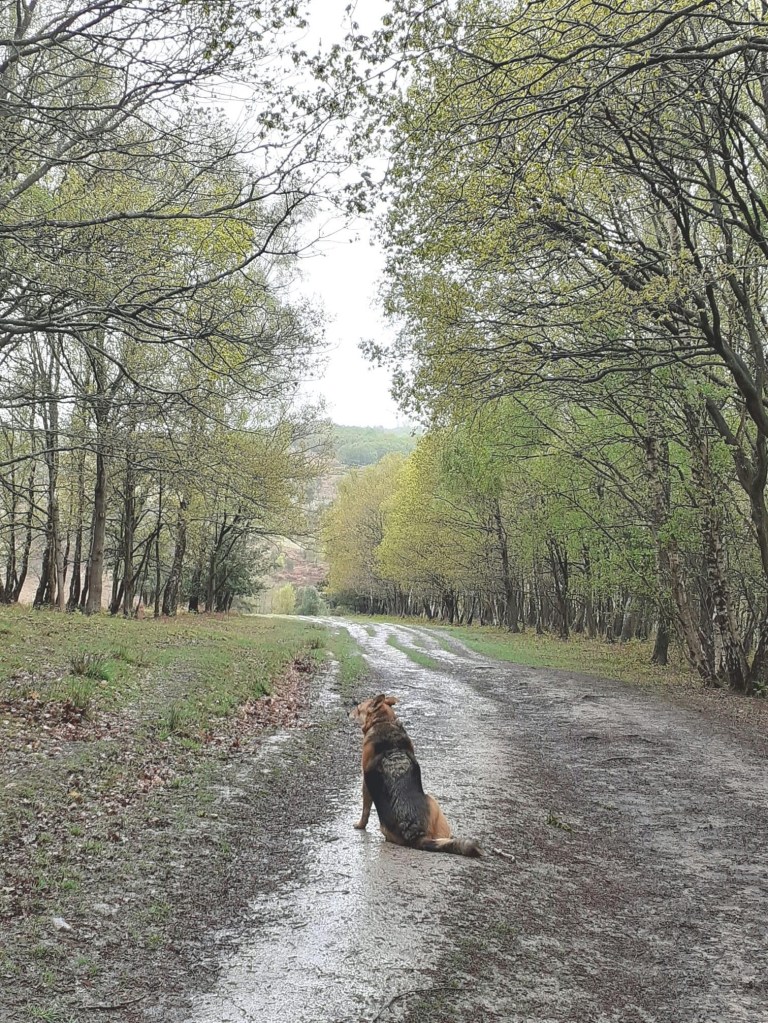
Kiera and the “Road Less Travelled”

Kiera is inviting you to go down what for you may be a “road less travelled”. Below the picture is a poem from Kiera. Below the poem is a link to the amazing story about Kiera’s journey from Romania to love and bonding in East Sussex, England. Please scroll down. Thank you.

Thank you to AW for the picture

Kiera speaks again…….

Wait! As my soul absorbs,
Echoes of times past…
The traces of paws
Of those now dead
Who have trod
This place, this bed…..
Their ashes are scattered
Tears were shed
Each one mattered
But now lives on
In Nature…….
The birds and earth-bound trees
The brackens and rustling breeze,
The whirling of streams
Curling and twirling
Ever dashing and splashing
There is no end
But hearts can mend
LOVE is here, it has been
As I sit, I have seen………

Thank you to Anna Wilkinson for passing on Kiera’s poem to me

Click here to read Kiera’s amazing story.

Click also here for “Kiera’s Lament – a Prayer for Ukraine”. You will continue to be amazed.

The title of this blog is based on the title of Dr. M. Scott Peck’s famous book “A Road Less Travelled”.

John Bartels